
Tell Me Why?

An informative site covering interesting and factual topics with concise answers to pondering questions. Tap into the collective wisdom of factual knowledge designed to educate all knowledge seekers. Tell Me Why: Answer your Questions and Satisfy your Curiosity. New content is published once each week.
Free Stuff | How To Use Site |
 Top News Videos
What is the difference between practice and practise?
Published Friday, June 20, 2008 by R. Edmondson.

 Do not confuse "practice" with "practise". They sound the same and even look similar (except that one is spelled with a “c” and the other with a “s”) but their meanings are different. The word "practice" is a noun, it refers to an act itself, not who is doing it. On the other hand, practise is a verb meaning 'do something repeatedly to improve one skill'. It is a systematic training by multiple repetitions (rehearsing a behavior or engaging in an activity several times repeatedly) in order to improve or mastering that skill. To put this much simply, practise is a verb (doing word) and practice a noun (thing).
 It should be noted that in American English, both the noun and the verb are spelled "practice". Both forms are however used in the British English whereas the distinction is almost obsolete in the U.S. As a matter of fact, in other English speaking countries (Australia, Canada, UK, Ireland, and South Africa), "practice" is the noun and "practise" the verb. It is therefore important to make sure that use the right version for the right audience.
Here are some examples below using the word "practice" (a noun) and "practise" (a verb):
Examples using the word “practice” (noun)
If you want to speak French well, you need to practice.
I'm afraid I'm rather out of practice.
It is their practice to give annual raises.
A hard theory to put into practice.
I can't see how your plan is going to work in practice.
The practice of the law.
It is not the local practice to wear shorts to dinner.
Practice makes perfect.
It seemed like a good idea before we started, but in practice it was a disaster.
Officially, Mary’s in charge, but in practice Susan runs the office.
This is a cruel practice which should be banned immediately.
I need to get some more practice before I take my driving test.
Are you coming to football practice this evening?
My singing practice has been a little lax, lately.
It is the usual practice of employees there to wear neckties only when meeting with customers.
It is good practice to check each door and window before leaving.
She refused to play the piano, because she was out of practice.
She ran a thriving medical practice.
He will need lots of practice with those lines before he performs them.
The doctor wanted his daughter to take over his practice when he retired.
She plans to set up practice in her hometown.
Examples using the word “practise” (verb)
The new government has promised all citizens the right to practise their religion.
Why don't you practise what you preach?
I'm quite good at tennis but I need to practise my serve.
She practises the violin every day.
She practised medicine for twenty years before she became a writer.
I practise the piano.
I need to practise my English.
You should practise more.
I need to start practising my singing every day.
They are practising for the Olympic games.
John is practising golf.
A practising doctor.
She is a confident and practised speaker who always impresses her audience.
 If you are having difficulty of remembering the difference between "practise" and "practice" then you can try using anyone one of the three methods given below. You should be able to use one as an easy way of remembering the difference between them:
i. Practice with a C is a noun, and practise with an S is a verb.
ii. Practice is a noun. It is thing because it has the word ice in it which is a cold, wet and slippery thing and practise is a verb - a doing word. It is not a noun because ise is not a thing.
iii. Practice is a noun. It as the word ice in it, which is a noun. Practise is a verb. It has the word is in it, which is a verb.
So remember in the United Kingdom, as well as, in other English speaking countries “practice” is the noun and “practise” the verb; but in the U.S. the spelling “practice” is mostly used for both the noun and the verb.
Related Articles:
What’s the difference between the words its and it's?
When do you use "a" or "an"?
What is the difference between "learnt" and "learned" ?
When do you use the word “fish” and “fishes”?
Labels: English
What’s the difference between the words its and it's?
Published Friday, December 21, 2007 by R. Edmondson.
 "Its", is the possessive adjective and possessive pronoun form of the personal pronoun "it". "Its" means "belonging to it." For example, The cat licked its paw.
On the other hand, "it's" is a contraction of "it is" or "it has". This simply means that we are combining two words (making a contraction) into one. So, instead of saying or writing for example; It is so nice to see you again, we could just have; It's so nice to see you again. The use of an apostrophe takes the place of the letter "i". This is the case when we use an apostrophe in combining two words to make it shorter. For example, she is = she's, does not = doesn't, I am = I'm, have not = haven't, and should not = shouldn't. As we can see here, we are replacing a letter with an apostrophe.
So remember, "it's" is short for "it is" (and less used "it has") and "its", is the possessive pronoun. Contractions always have an apostrophe, and is used to take the place of the dropped letter(s).
Related Articles:
When do you use "a" or "an"?
What is the difference between "learnt" and "learned" ?
When do you use the word “fish” and “fishes”?
 The two indefinite articles a and an are used with singular nouns when the noun is general. They refer to nouns which are non-specific (i.e. not definite). In other words, they refer to a particular thing that is not specifically known to the person who is making reference to that noun.
You should use "a" before nouns beginning with consonant sounds. An exception to this is a initial consonant silent "h" where it would be used for example, before the words; heir, hour, honor and honest. There are no audible sound and the sound that follows the article is a vowel. Thus, an should be used. However, when a word begins with an aspirated h such as house, hotel, hill and so on, then the article used is an. Some nouns beginning with consonant sounds are; a bottle, a picture, a broom, a store, a garage, a European and a red apple. It is also used before words beginning with consonants (b, c, d, f, g, h, j, k, l, m, n, p, o, r, s, t, v, w, x, z). It should also be noted that a can be used before words which begin with vowels (a, e, i, o, u,) but which are pronounced with an initial consonant sound. Here are two words for example which are pronounced with an initial y sound (yoo) and are treated as a consonant, requiring a:
i) words beginning with a long u (when pronounced as yoo) such as; utility, union, ubiquitous, united, unique, university and so on used a before these words.
ii) words beginning with eu such as eulogy and euphonium, used a before it.
On the other hand, you should use the word "an" before all vowel sounds. These are words which start with the letters a, e, i, o and u. Some examples are: an entry, an hour, an apricot, unbeliever, an orange, an ape, an unusual problem, an odor, an eye, an idea, an eagle, an orbit, an honor, an umbrella, an elephant and so on. Thus, when nouns start with a vowel, then the article used is an.
So the choice of article is based upon the sounding of the first letter in a word rather than on the letter itself.
Related Articles:
What is the difference between "learnt" and "learned" ?
When do you use the word “fish” and “fishes”?
 An idiom is a commonly used phrase, expression or group of words whose meaning cannot be understood from the ordinary meanings of the words. The meaning that is conveyed has little to do with the actual words expressed. In other words, it a phrase or expression that is (usually) not taken literally.
Idioms give a language color, character, variety and flavor to both the listener and the speaker. It is a language familiar to a group of people (e.g. another country, from a specific region, culture etc.). Therefore it is a manner of speaking that is natural to native speakers of a language which is not understood outside its culture. Every language would probably not understand English idioms. Therefore idioms can make a language very difficult to understand for new speakers. Thus understanding its meaning and its usage is important. The best way to learn and benefit from the study of idioms and their meanings, is through contextualization (assessing how and when the idomatic expressions are used).
Here are some examples and their meanings:
A
an egghead: a very intelligent person.
as easy as pie: very easy
at the eleventh hour: almost too late; at the last minute.
B
beat around the bush: evade an issue; avoid giving a direct answer.
by the skin of your teeth: barely succeed in doing something.
C
call it a day: stop work for the day.
G
grab a bite: get something to eat.
K
kick the bucket: die
M
make a mountain out of a molehill: To blow an issue or event out of proportion.
S
state of the art: The most advanced technique or method used; using the latest technology
U
under the weather: ill; sick; unwell.
For several more examples of idioms visit the headings below:
English Idioms: Water Idioms and their Meaning
English Idioms - English phrases and their meanings
What is the difference between "learnt" and "learned" ?
Published Friday, February 16, 2007 by R. Edmondson.
 "Learnt" and "learned" are two acceptable forms of the past simple/past participle of the verb learn, which means exactly the same thing. Learn is an irregular verb in the British English where the past tense is spelt with a ‘t’ at the end - [learn/ learnt]. Conversely, Learn is a regular verb in the American English where the past tense is spelt with a ‘ed’ at the end - [learn / learned]. Thus, neither is incorrect as “learnt” is more commonly used in the British English, and “learned” in American English.
Using anyone of these two forms are correct and is up to your preference. However, you would want to use the one that is more widely used or accepted in your country. When using any one of these forms you must use it consistently in your writings and don’t interchange your use of them. In other words, avoid mixing the “ed” and the “t” endings in your writings.
There’re other forms of verbs of the past simple/past participle in both American and British English. Some of these are: burned/burnt, smelled/smelt, spelled/spelt, spilled/spilt, spoiled/spoilt, dreamt/dreamed, leant/leaned, smelt/smelled etc.
Related Articles:
When do you use the word “fish” and “fishes”?
American and British English
Differences between American and British English - PT. 2
Differences between American and British English - PT. 1
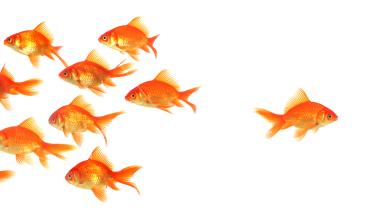 Some nouns have the same form in the singular and the plural and the word “fish” is such an example. As such, fish is the usual plural word for fish whereby the plural form is the same as the singular. However, strictly speaking, fish is more correctly used to refer or describe an individual fish or the plural of a single species of fish (multiple individuals of the same species). The term “fishes” on the other hand, is used to refer or describe the plural of different species of fish (more than one species of fish).
So, fish can be used in a singular form when describing one fish, as well as, in a plural form only when describing two or more fish of the same species.
Examples:
- A fish is a cold blooded vertebrate animal that lives in water. (singular)
- Salmon is a fish. (singular)
- I swam with a school of 200 fish. (plural)
- Fish are cold-blooded vertebrate animal that live in the water. (plural)
- I caught six fish in the river yesterday. (plural)
 While fishes is always plural and is used when describing more than one species of fish.
Examples:
- There are a lot fishes in the sea. (plural)
- Ichthyology is the study of fishes. (plural)
| Headline | Using Site | MyGame |
|

Message from the Author

Thanks for stopping by my site. I hope you will find this site interesting and informative and that you do learn something before you leave here. Please take the time to drop me a few lines and do come again. |
|
|

Last Questions Answered
- What are Shooting Stars?
- What is the difference between practice and practise?
- Why is space black?
- What is the Miranda warning?
- What’s the difference between the words its and it's?
- Is there a difference between an emoticon and a sm...
- How do Astronauts communicate in space?
- Is there sound in space?
- When was slavery abolished in the US and what did ...
- What does it mean by a country having its independ...

Archives of Knowledge

Click Menu Tab To View
- Scholarships for College
- Scholarship Experts
Loans for College
- Consolidate Student Loans
- Student loans- Save more
A. Educational Sites
- World Clock
- How Stuff Works
- Online Study Programs
- Eassy Writing Tips
- The Library of Congress
B. Educational- Commercial
- Amazon.com: Textbooks...
- eCampus.com: books...
- Abebooks.com
- eBay's Half.com
- Learn Spanish Quickly
- Finish College Fast

C. Freebies Stuff
- Free Custom Print Products!
- Free Health sample products
- Tell Me Why Free Stuff
~Free Blog & Website Tools~
- Free Tools and Services
~Web Tools~
- Free Alexa Toolbar
 Subscribe To Tell Me Why:
| Click The [+] To Subscribe | [−] |


| Site Awards & Recognition | [−] |

March 19, 2007 ------------------------------------

Category: Best New Blog 2006 ------------------------------------

November 8, 2007 ------------------------------------

November 15, 2007 ------------------------------------

------------------------------------
 ------------------------------------
| This Site Is Approved By: | [−] |


| Science News Of Interest | [−] |


